Sound familiar?
If your brain feels like it's running on dial-up in a 5G world, you're not imagining things. Your focus isn't just wandering—it's under attack. And the culprits? They're everywhere.
The Modern Focus Crisis Nobody's Talking About
Here's a sobering fact: Only 21% of workers globally were engaged at work in 2024, according to Gallup research. This epidemic of distraction is costing the global economy a staggering $438 billion in lost productivity. But the financial toll is only part of the story.
Research from 2004 showed the average attention span on any screen was two and a half minutes. Fast forward to today, and that number has plummeted even further. For Gen Z individuals, the average attention span hovers around just eight seconds—four seconds less than millennials. That's less time than it takes to read this paragraph.
The harsh truth? Your brain isn't broken. It's drowning.
The Triple Threat Stealing Your Cognitive Edge
1. Digital Distraction: The Attention Assassin
Your smartphone isn't just a tool—it's a weapon of mass distraction. Apps are deliberately designed with push notifications, algorithms, and gamification features engineered to hijack your attention. Even having your phone sitting silently on your desk can fragment your focus and spike your stress levels.
The damage runs deeper than you think. Heavy screen time has been directly linked to attention problems, particularly in younger adults. Social media platforms fragment your attention, interfere with cognitive functions, diminish concentration, and disrupt your workflow. The result? A constant state of cognitive overload that leaves you mentally exhausted by 2 PM.
2. The Multitasking Myth
Here's what most productivity gurus won't tell you: Your brain cannot multitask.
When you think you're multitasking, your brain is actually rapidly switching between tasks—and it's terrible at it. Stanford University research revealed a shocking truth: heavy multitaskers are worse at filtering irrelevant information, keeping information organized, and switching between tasks. They literally perform worse at the very thing they think they're good at.
Every time you switch from one task to another—even just glancing at your inbox for 15 seconds—you initiate a cascade of cognitive changes that drain your mental energy. Georgetown professor Cal Newport calls this "productivity poison," and he's not exaggerating.
3. The Stress-Focus Connection
According to the American Psychological Association, Generation Z and millennials report significantly higher stress levels than older adults. About two-thirds of 18- to 34-year-olds say stress makes it hard for them to focus.
When stress becomes chronic, it floods your system with cortisol—a hormone that directly disrupts your brain's ability to concentrate. Add sleep deprivation, poor nutrition, and constant electromagnetic stimulation from devices, and you've created the perfect storm for brain fog.
What's Really Happening in Your Brain
Brain fog isn't just a catchy phrase—it's a legitimate symptom of cognitive overload. The signs are unmistakable:
-
Trouble concentrating and forgetfulness
-
Low energy or fatigue
-
Impaired cognitive function
-
Mood swings and irritability
-
Low motivation and lack of mental clarity
-
Headaches and trouble sleeping
These symptoms stem from a lifestyle that promotes hormonal imbalances, exacerbated by electromagnetic radiation from devices, chronic stress, lack of quality sleep, nutritional deficiencies, and environmental toxins.
Your brain requires a delicate balance of neurotransmitters, optimal blood flow, and key nutrients to maintain peak cognitive performance. When any of these elements fall out of balance, your mental clarity suffers.
The Science of Getting Your Focus Back
The good news? Recent research reveals that cognitive function can be enhanced through strategic lifestyle interventions combined with targeted nutritional support.
The Lifestyle Foundation
Before anything else, you need to address the basics:
-
Strategic breaks matter: Mental fatigue amplifies brain fog. Regular movement breaks, deep breathing, and stepping away from screens can reset your focus and energy.
-
Sleep is non-negotiable: Aim for 7-8 hours with a consistent bedtime, and avoid screens for at least an hour before sleep to reduce brain inflammation.
-
Fuel your brain properly: A diet rich in fruits, vegetables, whole grains, and lean proteins directly impacts brain function. Foods like berries, nuts, and fish have demonstrated brain-boosting properties.
-
Move your body: Regular physical activity increases blood flow to the brain, enhancing memory and concentration. Even 30 minutes of moderate exercise most days can sharpen your mental edge.
The Cognitive Support Arsenal
While lifestyle changes lay the foundation, modern research reveals that specific nutrients and botanical compounds can provide targeted support for focus, memory, and mental clarity.
Ginkgo Biloba: The Ancient Focus Enhancer
One of the most extensively studied cognitive supplements, ginkgo biloba has demonstrated remarkable benefits for brain function. Research shows it can improve memory, attention, processing speed, and executive function—skills like planning, decision-making, and flexible thinking.
Studies found that ginkgo biloba increases mental processing speed, allowing people to complete cognitive tasks more quickly. In longer studies of patients with cognitive impairment, 18 weeks of ginkgo biloba treatment resulted in noticeable improvements in memory, thinking speed, and complex reasoning.
Ginseng: The Working Memory Warrior
American ginseng has shown particularly impressive effects on working memory—the cognitive system you use to temporarily hold and manipulate information. In double-blind, placebo-controlled studies, American ginseng significantly improved working-memory performance in healthy young adults.
Research also indicates that ginseng treatment (200 mg/day) significantly improved working memory and mental arithmetic performance. A six-month study found positive effects on cognitive improvement, particularly visual memory. The cognitive-enhancing effects appear to work by supporting brain plasticity and mediating both central and peripheral nervous system functions.
The B Vitamin-Omega-3 Synergy
Here's where the science gets really interesting. Research has revealed a powerful synergy between B vitamins and omega-3 fatty acids for cognitive function.
Studies show that when omega-3 fatty acid concentrations are in the upper normal range, B vitamin treatment significantly slows cognitive decline. However, when omega-3 levels are low, B vitamins have no effect. People with high levels of omega-3 in their blood who took vitamin B performed better at thinking and memory tests compared to those with lower omega-3 levels.
This synergistic relationship means that for optimal cognitive support, you need both nutrients working together—not in isolation.
Your Action Plan: Reclaim Your Mental Clarity
The path to sharper focus and clearer thinking isn't about a single magic bullet. It's about creating a comprehensive support system for your brain.
Start with these three steps:
1. Establish Digital Boundaries
Set specific times to check email and social media rather than responding to every ping. Use your phone's focus modes to limit notifications during deep work sessions. Consider designating device-free zones in your home—especially your bedroom.
2. Embrace Single-Tasking
Stop glorifying multitasking. Choose one task, set a timer for 25-50 minutes, and commit to giving it your full attention. You'll accomplish more in focused sprints than in scattered sessions.
3. Provide Targeted Nutritional Support
Consider supplements specifically formulated to support cognitive function. Look for formulas that combine researched ingredients like ginkgo biloba and ginseng, or comprehensive brain support blends that include B vitamins and other cognitive-supporting nutrients.
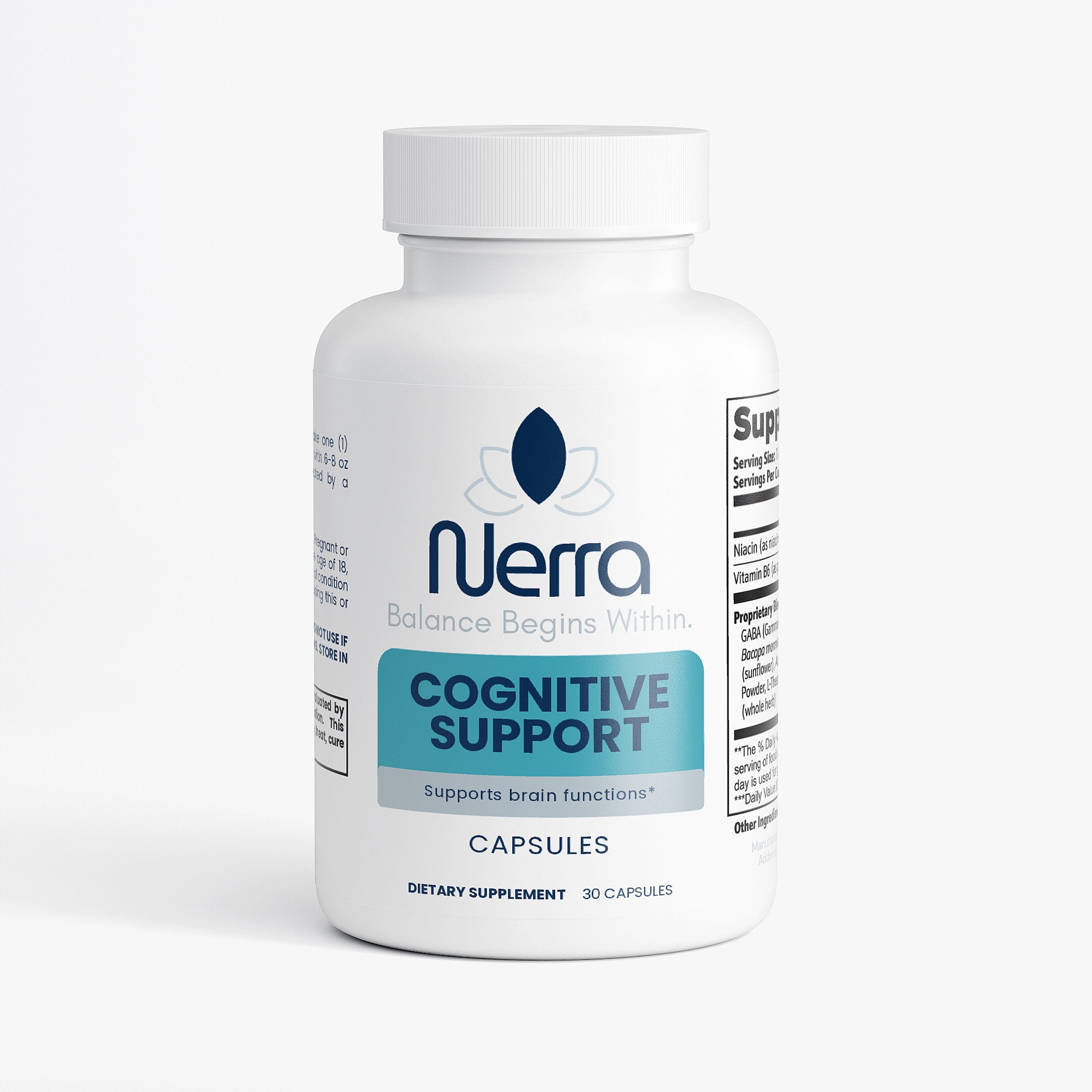
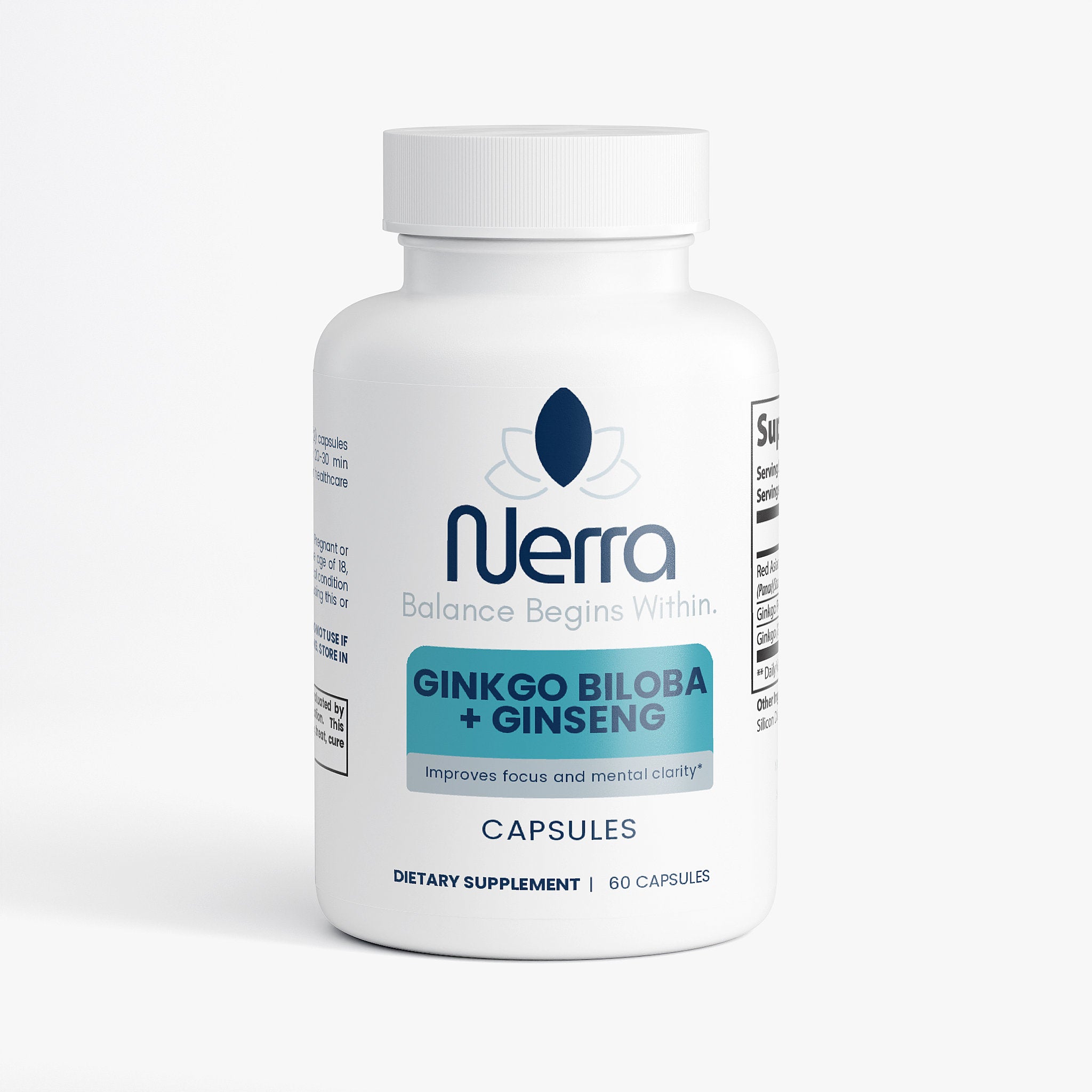
At Nerra, we've developed our Cognitive & Focus line with these scientific insights in mind:
-
Ginkgo + Ginseng: Combines two of the most researched botanical ingredients for memory, attention, and mental processing speed.
-
Brain & Focus Formula: A comprehensive blend designed to support multiple aspects of cognitive function, from working memory to mental clarity.
-
Cognitive Support: Formulated to provide foundational nutritional support for optimal brain health and performance.
The Bottom Line
Your brain is the most remarkable organ in your body—capable of extraordinary focus, creativity, and problem-solving. But it needs the right environment and support to thrive.
You can't eliminate every distraction or stressor in modern life. But you can take control of how you respond to them. You can create boundaries that protect your attention. You can fuel your brain with the nutrients it needs to perform at its best.
The question isn't whether your focus can improve.
The question is: What are you willing to do about it?
Start supporting your cognitive health today. Explore Nerra's complete Cognitive & Focus collection and discover how targeted nutrition can help you think clearer, focus longer, and perform better—every single day.